
An unauthorized internal memo instructs federal prosecutors to file “domestic terrorism” charges against civilians who film or record immigration enforcement activities.
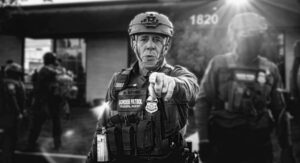
On December 16, U.S. Border Patrol Commander Gregory Bovino made a surprise return to the Chicago region, accompanied by hundreds of federal agents and a production crew, following his departure just a month prior. Local leaders immediately condemned Bovino for reverting to the confrontational methods that had triggered protests earlier in the year, accusing him of utilizing law enforcement operations as a form of political performance art.
Speaking to the Chicago Sun-Times, a representative for Democratic Mayor Brandon Johnson denounced the agents for allegedly conducting indiscriminate arrests without warrants. The mayor’s office further criticized the decision to film the raids, arguing that it transforms serious law enforcement maneuvers into a public “spectacle.”
“These operations are taking place alongside a production crew, suggesting a desire to generate media content even if it means traumatizing families,” the spokesperson stated. “Such destabilizing and unethical tactics are wrong and deserve full condemnation.”
However, this is not the first instance of a federal agency filming enforcement actions for theatrical effect. Beyond achieving record deportation numbers, the Department of Homeland Security (DHS) under President Trump appears to have evolved into a promotional tool intended to market unpopular immigration strategies to the electorate. Recent examples include an official DHS Instagram montage of arrests and a video shared on X by DHS Secretary Kristi Noem, showing agents raiding a South Shore apartment on September 30.
While Bovino and the DHS utilize cinematic techniques to showcase their policies, the Trump administration is simultaneously penalizing private citizens who document these same operations. A December 4 directive from the Justice Department, leaked by journalist Ken Klippenstein, advises prosecutors to apply “domestic terrorism” charges to those who “dox” officers. Although the memo leaves the term vague, it implies that publishing identifying details about law enforcement is a threat intended to “silence opposing speech” and disrupt democratic function.
This interpretation aligns with earlier rhetoric from DHS leadership, such as Secretary Noem’s July remarks. She explicitly defined violence as anything threatening agent safety, stating, “it’s doxing them, it’s videotaping them where they’re at when they’re out on operations.”
Yet, much of the conduct the administration labels as dangerous “doxing” consists of bystanders simply filming officers on duty—a practice protected by the First Amendment provided there is no physical interference. David Bier, director of immigration studies at the Cato Institute, argues that by stretching the definition of domestic terrorism to cover “doxing,” the administration has established a national policy designed to threaten and intimidate those seeking to observe DHS activities.
Under such an expansive classification, even the media teams and camera crews hired by the DHS to publicize these raids could theoretically face domestic terrorism charges. The memo’s only distinguishing factor appears to be political alignment, specifically targeting “Antifa-aligned extremists”—defined in the document as individuals holding “extreme viewpoints,” such as supporting “mass migration and open borders.”
However, constitutional free speech protections do not evaporate simply because the government objects to a citizen’s expression. Trying to adjudicate who qualifies for First Amendment protection is not only unconstitutional but also creates a dangerous precedent that could eventually expose even the President’s supporters to the whims of federal prosecutors.