
Pharmaceutical companies intend to increase U.S. prices for at least 350 brand-name medications—including the blockbuster cancer drug Ibrance and vaccines for COVID, shingles, and RSV—even as the Trump administration pushes for reductions, according to data supplied exclusively by the healthcare consultancy 3 Axis Advisors.
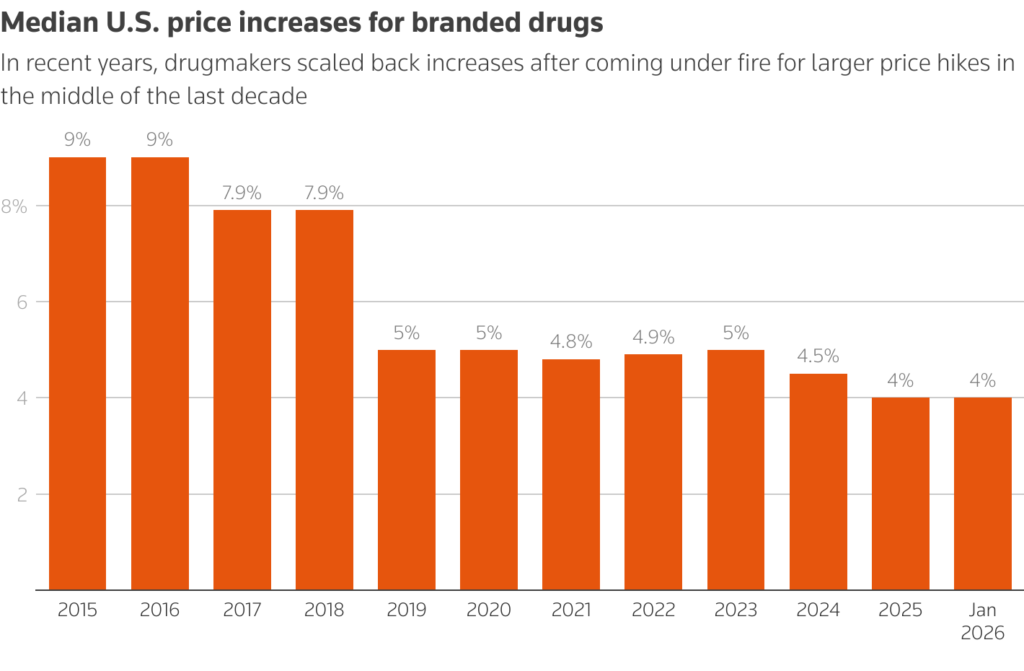
The volume of price hikes scheduled for 2026 exceeds last year’s figures, when manufacturers announced increases for approximately 250 drugs. The median rise for this year sits at about 4%, mirroring the trends observed in 2025.
These listed increases do not account for any rebates paid to pharmacy benefit managers or other negotiated discounts.
MANUFACTURERS ALSO LOWER SOME PRICES
Conversely, drugmakers are planning to reduce the list prices for roughly nine medications. This includes a cut of over 40% for Jardiance, a diabetes treatment from Boehringer Ingelheim, along with three associated therapies.
Neither Boehringer Ingelheim nor Eli Lilly, which jointly market Jardiance, provided immediate comments regarding the rationale behind these price reductions.
Jardiance is included in the initial list of 10 drugs subject to U.S. government price negotiations for the Medicare program serving seniors aged 65 and older in 2026. Through these negotiations, Lilly and Boehringer agreed to slash the price of Jardiance by two-thirds.
American patients currently shoulder the highest prescription costs globally—often paying nearly triple the rates found in other developed nations—prompting Trump to pressure the industry to lower prices to levels seen in similarly wealthy countries.
The price hikes on 350 products come despite agreements Trump has reached with 14 manufacturers regarding pricing for the government’s Medicaid program and cash-paying customers. Companies such as Pfizer, Sanofi, Boehringer Ingelheim, Novartis, and GSK are part of these deals yet still plan to raise prices on select items on January 1.
“These deals are being framed as transformative when, in fact, they really just nibble around the margins in terms of what is really driving high prices for prescription drugs in the U.S.,” remarked Dr. Benjamin Rome, a health policy researcher at Brigham and Women’s Hospital in Boston.
Rome observed that the companies appear to be keeping list prices high while negotiating secret discounts with insurers, all while establishing a separate price point for direct-to-consumer cash sales.
A spokesperson for the Department of Health and Human Services declined to comment.
TRACKING WITH INFLATION
Pfizer announced the highest number of list price increases, affecting around 80 products, including the migraine medication Nurtec, the COVID antiviral Paxlovid, and the cancer drug Ibrance, as well as hospital staples such as morphine and hydromorphone.
While a few of Pfizer’s lower-cost hospital medications will see prices increase more than four-fold, most of its hikes are under 10%, with the exception of the Comirnaty COVID vaccine, which is set to rise by 15%.
In a statement, Pfizer noted that it had adjusted the average list price of its innovative medicines and vaccines for 2026 to remain below the overall rate of inflation.
“The modest increase is necessary to support investments that allow us to continue to discover and deliver new medicines as well as address increased costs throughout our business,” the company stated.
Significant drug price spikes in the U.S. used to be far more frequent. Manufacturers have scaled them back following criticism from lawmakers and the implementation of new policies, such as penalties for companies that raise Medicare prices faster than inflation.
European manufacturer GSK plans to raise prices on approximately 20 vaccines and drugs by margins ranging from 2% to 8.9%. The company stated it remains committed to reasonable pricing and that the hikes are required to support scientific innovation.
Novartis and Sanofi did not respond to requests for comment.
Additional price adjustments are expected in early January, which is historically the most active month for drugmakers to raise prices.
3 Axis is a consulting firm that advises pharmacist groups, health plans, and industry organizations on supply chain and drug pricing issues. It is an entity related to, and shares personnel with, the drug pricing non-profit 46brooklyn.